



18 Mar, 2026
How Lift Pit & Overhead Errors Increase Project Cost
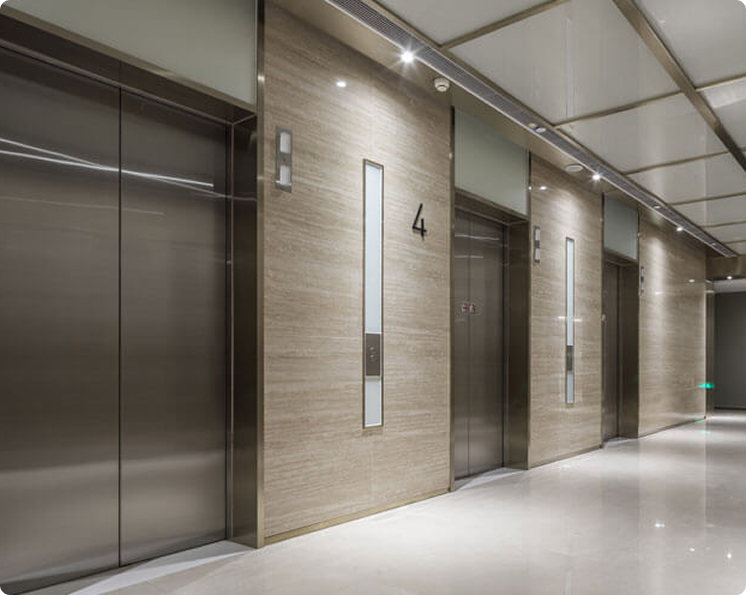
In vertical transportation, precision is not only the level of the players but also a financial necessity. Lift pit and overhead errors arise when the structural dimensions of the hoistway do not match the mechanical requirements of the lift. But that is not all since such errors remain unnoticed until the last stage of the project, causing developers to make expensive compromises. Moreover, it is the knowledge of the elevator civil requirements that will help you throughout the construction phase, keeping you on time, preserving the structure, and sticking to your budget, in projects such as industrial elevators in Udaipur, Gandhinagar and other rapidly developing cities in India.
We at Jet Lifts offer a complete range of technical assistance and a consultation service for architects and developers. Through this, you can frame structural “hidden costs” arising due to a wrongly constructed shaft by specifying the minimum lift pit depth and overhead height at the design stage.
Lift Shaft Pit and Overhead Dimensions
To understand why errors are so costly, one must first understand what is the purpose of a lift pit and why overhead space is non-negotiable. These two zones represent the safety envelopes of the hoistway, designed to protect both the mechanical system and the technicians who maintain it. Getting the lift shaft pit and overhead dimensions right during the early structural phase ensures that all safety buffers and structural supports fit perfectly.
In building planning, even a minor deviation from the specified elevator pit requirements can compromise the entire vertical transport system. A properly designed pit and overhead prevent the elevator car from bottoming out or striking the shaft ceiling during an over-travel event. By adhering to precise lift pit & overhead construction guidelines, you guarantee a safe environment that meets rigorous engineering standards.
What Is the Function of a Lift Pit?
A lift pit is a room located under the lowest floor of the building. Its main functions include:
- Housing Safety Equipment: It contains car buffers and shock absorbers for emergency scenarios.
- Maintenance Access: It provides the necessary clearance for technicians to perform safety checks.
- Structural Support: It accommodates guide rail brackets and tensioning devices.
Importance of Overhead Height
In the same way, the overhead, the space between the top landing and the shaft ceiling, allows the car to perform an over-travel safely without hitting the roof. A lift will not be able to be legally commissioned if the lift pit & overhead construction guidelines are ignored.
Building Planning Mistakes for Lift Pit and Overhead
Most of the cost impact of elevator shaft construction errors is due to the lack of communication between the civil contractor and the lift provider. Some common building planning mistakes for lift pit and overhead are:
- Incorrect Pit Depth: A pit that is only 100mm too shallow might even mean breaking a reinforced concrete foundation, which is not only a loud operation but also highly expensive.
- Standardizing “Average” Dimensions: Elevator pit requirements don’t have a universal size. Each model, from MRL gearless to hydraulic, has its implementation needs. Using “standard” guesses instead of actual manufacturer drawings is a sure path to disaster.
The Financial Cost Impact of Elevator Shaft Construction Errors
Financial consequences of constructing a shaft with incorrect lift shaft pit and overhead dimensions can be extensive and complex, particularly in high-load applications like industrial elevators in Jodhpur where structural accuracy is critical for long-term safety and performance:
- Structural Rework: Expenses related to the demolition and reconstruction of reinforced concrete.
- Storage Fees: As the lift shaft will not be ready, the components usually get delivered to the site and require storage in costly warehouses.
Conclusion
One of the main ways to avoid lift pit and overhead errors starts with choosing the right partner in the civil planning phase. At Jet Lifts, we consider accuracy and direct communication as top priorities so that your elevator shaft is constructed perfectly the first time. This is especially important in projects involving customized elevators in Bhuj and other locations where unique building requirements demand tailored shaft designs, helping prevent structural demolition and costly redesigns. When you bring in our engineering skills at the start of building, not only are you securing your investment, but also you are ensuring that your clients will receive a smooth handover. Our experts coordinate with your contractors at every step to double-check shaft dimensions down to the last millimeter.
Don’t let construction errors drain your budget. Contact Jet Lifts today for expert guidance on elevator civil requirements and high-performance lift solutions!
Frequently Asked Questions
- What are the dimensions of an elevator pit for a standard building?
It depends, but usually, a commercial traction lift needs a pit about 1200mm to 1500mm deep. On the other hand, Jet Lifts is able to offer very low-pit solutions for cases needing architectural accommodations.
- What is the minimum lift pit depth and overhead height for home elevators?
Because of their different usage mode, home elevators can be installed quite easily with just a 150mm-300mm pit and a minimum overhead height of 2400-2800mm, which changes per model.
- How can I avoid building planning mistakes for lift pit and overhead?
The easiest and surest way is to request a “hoistway drawing” from the lift manufacturer before the foundation pour. The drawing specifies the dimensions of an elevator pit for the exact equipment you will be installing.
- Can a lift be installed if the overhead is too low?
Generally, no. Safety regulations are quite rigid. If the overhead is found to be too low, you will either have to alter the roof structure or install a different type of lift system. Both options will greatly add to the total cost impact of elevator shaft construction errors.