



14 Aug, 2026
Elevator Installation Process: From Manufacturing to Handover
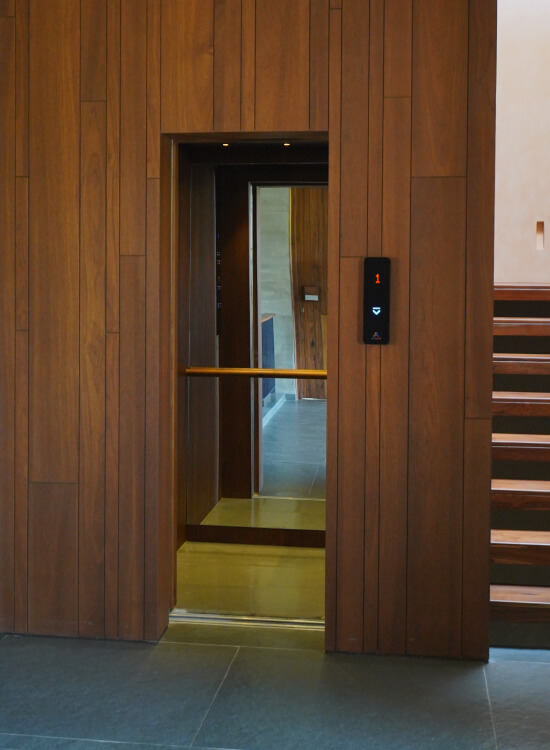
The majority of delays during the elevator installation phases are unrelated to the lift itself. It may be that the shaft is a few millimetres off the plumb line, the three-phase power connection is not yet completed, or the license application has been submitted late. Once you think about the process as a chain of interlinked actions, starting from the manufacturing and finishing with the final signature from the inspector, you will know how to avoid any of these pitfalls. This blog explains how the commercial and public elevator projects are unravelling according to the Jet Lifts specifications for commercial and public elevators.
Manufacturing Comes First, and It Decides Your Timeline
Production starts only after the general arrangement drawings have been approved, so the best way to make your project faster is to freeze your decisions as early as possible.
During this stage, the factory builds and tests the car frame, doors, controller, guide rails and machine as one matched set. Treat this window as your preparation time on site, because the civil work should finish before the material arrives, not after.
Elevator Site Preparation: Get These Things Ready Before Delivery
Elevator site preparation is where most projects lose weeks, so work from a written elevator installation checklist rather than memory. Before the material reaches your gate, the site must have:
- You must have a square RCC pit constructed as per the approved drawings, along with the depth of the pit and the height as mentioned.
- The electrical connections should be connected to a three-phase power supply, as that eliminates the use of a temporary single-phase power supply.
- Also, secure the Form A permission from the lift inspector, as required according to the laws in force in your state (in Gujarat, it is governed under the Gujarat Lifts and Escalators Act, 2000).
- You will require a lockable storage room at the ground level, which needs to be dry and in close proximity to the lift shaft.
- Also, you may need to set up scaffolding to ensure the installation of the elevator, unless the installation process by the contractor does not require any scaffolding at any location.
At this point in time, one of the most important decisions you may need to finalise is about the machine room. If you can do away with a machine room and go with the MRL gearless system, that will save you a substantial amount of the construction cost involved in constructing the vertical shafts.
How the Elevator Assembly Process Moves Floor by Floor
The elevator assembly process follows a fixed sequence, and a good installer will not jump ahead in it. Plumb lines and templates go in first, because every later component references them. Guide rails follow, aligned along the full travel. Then the machine and controller, the counterweight, the car frame and cabin, and finally the landing and car doors.
Elevator equipment installation at this stage is slow by design. Rail alignment tolerances sit within millimetres, and a rushed elevator installation procedure shows up later as ride vibration and premature shoe wear. Expect the wiring, safety circuits and door mechanisms to take nearly as long as the mechanical erection itself. That is normal, and it is where ride quality is actually built.
Elevator Testing and Inspection: From Commissioning to the Lift Licence
Elevator commissioning is the stage where the lift stops being a construction item and starts being a machine you can defend in an audit. The commissioning team runs the safety gear, overspeed governor, door interlocks at every landing, overload device, buffers and levelling accuracy through documented tests. Since December 2025, new installations in India follow IS 17900, the safety code that replaced IS 14665.
Only after internal elevator testing and inspection passes does the statutory step begin. The owner submits Form B to the Inspector of Lifts, who conducts the official elevator safety inspection. If the installation satisfies the Act, the Rules and the applicable Indian Standard, the inspector issues the working licence in Form C. No licence, no passengers. Who answers for what during this stage is a common dispute on larger sites, and we have covered the split of consultant and manufacturer responsibility in elevator safety separately.
Elevator Project Handover: What You Should Walk Away With
A proper elevator project handover is a file, a demonstration and a plan, handed over together. Insist on all three:
- The Form C licence, test records and approved drawings
- The operation and maintenance manual, warranty terms and the AMC start date
- A working demonstration for your facility staff, including the manual rescue procedure
The elevator installation requirements do not end at handover. The licence needs periodic renewal, and the lift needs scheduled maintenance from day one. We apply this same closure process on heavy-duty units too, such as our industrial elevators in Baroda, where handover training covers loading discipline as well as operation.
Conclusion
The elevator installation process rewards owners who treat paperwork and civil readiness as seriously as the machinery. Freeze your drawings early, finish the shaft before the material lands, apply for Form A on time, and refuse to run the lift before Form C is in hand. Do that, and the workflow runs in the order it was designed to.
Planning a lift for your building? Talk to Jet Lifts for a site assessment and a stage-wise installation plan matched to your state’s licensing requirements.
Frequently Asked Questions
How Long Does the Elevator Installation Process Take?
On-site work for a standard passenger lift usually runs a few weeks per unit, but the full elevator installation process, from drawing approval through manufacturing to the Form C licence, is measured in months. Civil readiness and licensing timelines vary by state, so ask your installer for a stage-wise schedule rather than a single date.
What Is Elevator Commissioning?
Elevator commissioning refers to the process of testing all performance and safety aspects of the lift, including safety devices, governors, interlocks, overload devices, as well as levelling in a documented manner. It is to confirm that the lift has been installed according to the approved design.
Who Issues the Lift Licence After Installation?
Your state lift inspector is responsible for this process. After the owner submits Form B, the inspector carries out an elevator safety inspection and issues the working licence in Form C if everything is fine with the elevator after the inspection. The procedure falls under the Gujarat Lifts and Escalators Act of 2000.
What Should Be Ready on Site Before the Lift Arrives?
Before installation begins, the following elevator installation requirements need to be in place: a plumb finished shaft, correct height of the pit and the headroom, three-phase power, permission in Form A, as well as dry storage of the elevator.